
Thermoplastic
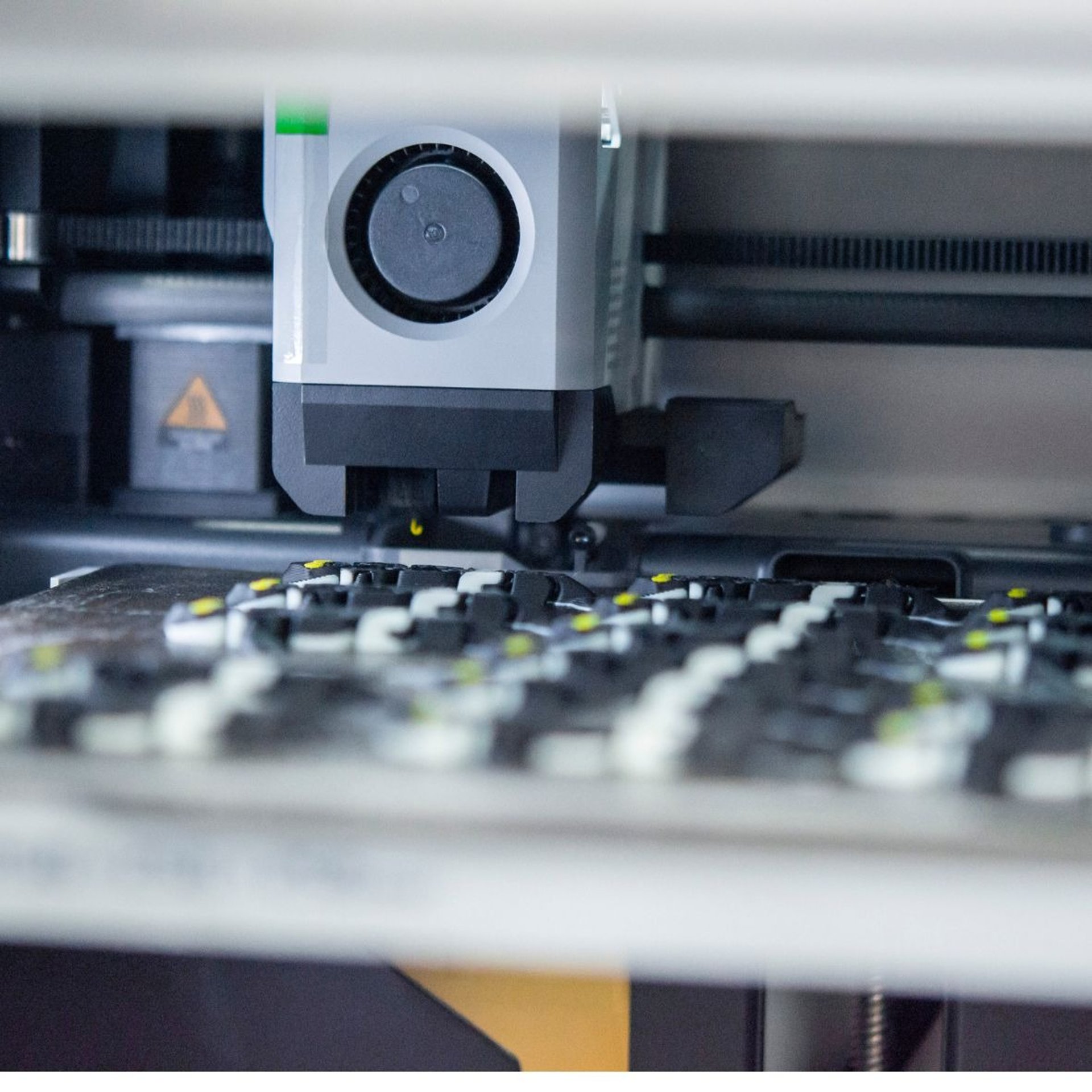
Thermoplastic 3D printing is an additive manufacturing process that uses heat to melt and extrude plastic filament layer by layer to create three-dimensional objects. The most common method is Fused Deposition Modeling (FDM), where a heated nozzle deposits melted thermoplastic (such as PLA, ABS, or PETG) onto a build platform.
PLA
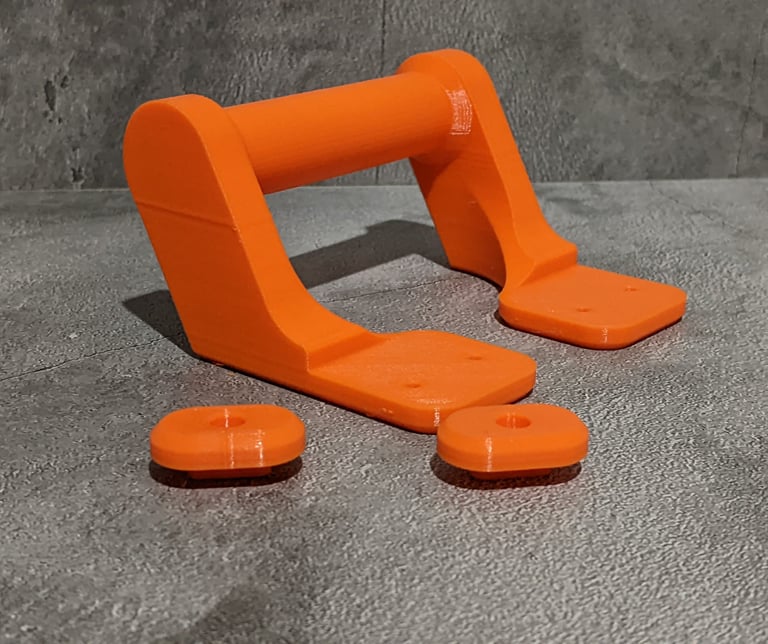
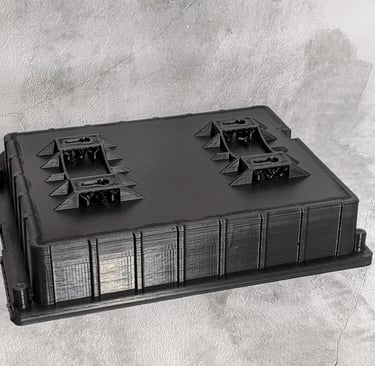
PLA (Polylactic Acid) is a versatile thermoplastic known for its ease of printing, good dimensional accuracy, and smooth surface finish. Its benefits include low warping, cost efficiency, and suitability for fast turnaround prototyping and visual models. PLA is commonly used for concept prototypes, design validation, display models, art objects, and non-load-bearing parts where aesthetics and speed are prioritized.
Material Info
Young’s modulus (X-Y) (ASTM D638 ) : 2600 ± 215 (MPa)
Tensile strength (X-Y) (ASTM D638) : 59 ± 1 (MPa)
Elongation at break (X-Y) (ASTM D638) : 15.0 ± 0.8 (%)
Bending modulus (X-Y)(ASTM D790) : 2700 ± 154 (MPa)
Bending strength (X-Y) (ASTM D790) : 81 ± 2 (MPa)
Charpy impact strength(X-Y) (ASTM D256) :4.3 ± 1.3 (KJ/m2)
PETG
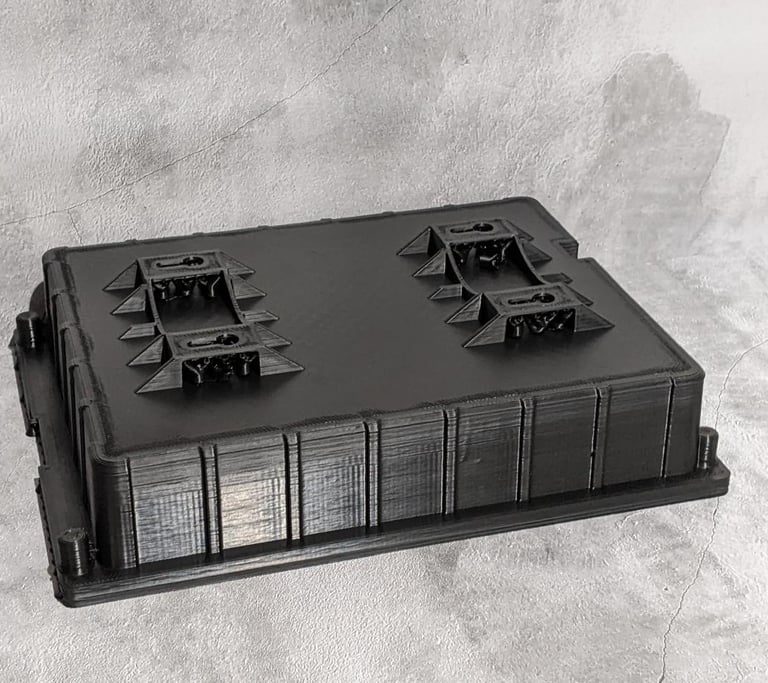
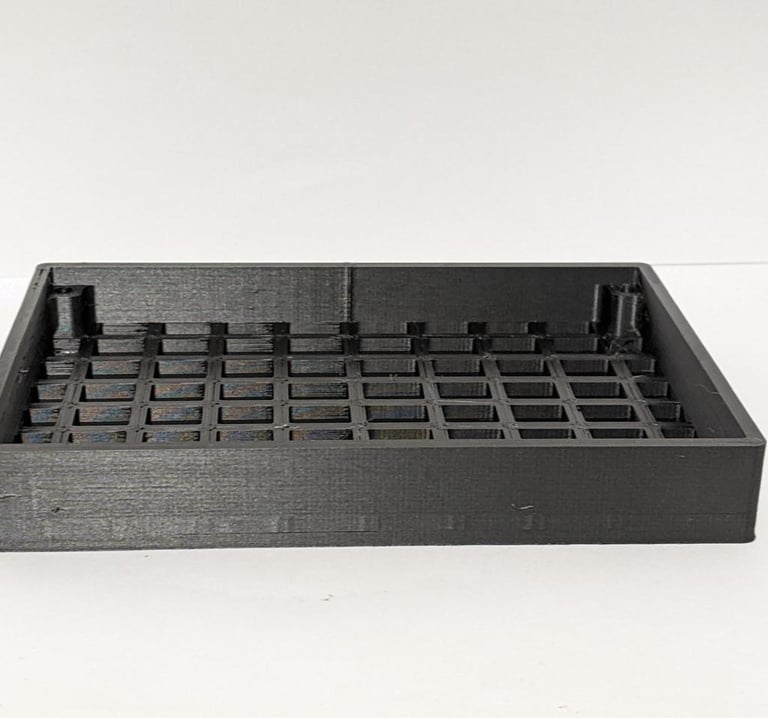
PETG (Polyethylene Terephthalate Glycol) is a durable thermoplastic that combines good strength, flexibility, and impact resistance with excellent layer adhesion. Its benefits include low warping, chemical and moisture resistance, making it reliable for functional parts. PETG is commonly used for enclosures, mechanical components, containers, outdoor parts, and functional prototypes that require toughness and environmental resistance.
Material Info
Tensile Strength(GB/T 1040): 52.2 MPa
Flexural Strength(GB/T 1040): 83 %
Elongation at Break(GB/T 9341): 58.1 MPa
Flexural Modulus(GB/T 1843): 1073 MPa
IZOD Impact Strength (GB/T 1843): 4.7 kJ/m2
ABS
ABS (Acrylonitrile Butadiene Styrene) is a strong and impact-resistant thermoplastic known for its durability and heat resistance. Its benefits include good mechanical strength, post-processing capability, and suitability for functional parts that require toughness. ABS is widely used for housings, enclosures, automotive components, jigs & fixtures, and functional prototypes where strength and thermal resistance are essential.
Material Info
Heat deflection temperature(ISO 75): 1.8MPa98°C
Flexural strength(ISO178): 65.5MPa
Flexural modulus(ISO178): 1,530MPa
Impact strength notched Izod(ISO179): 16.4KJ/m²
Hardness Shore D(ASTM D2240): 65
Young's modulus(ISO 527): 1847MPa
Tensile strength(ISO 527): 28.8MPa
Elongation at breakISO 527): 3.8%
ASA
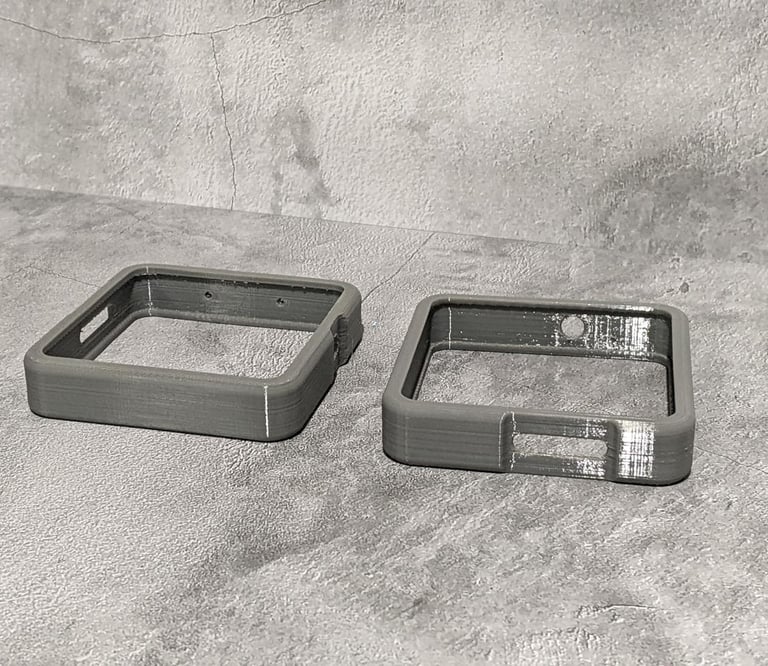
ASA (Acrylonitrile Styrene Acrylate) is a weather-resistant thermoplastic with good mechanical strength and excellent UV and temperature stability. Its benefits include long-term outdoor durability, color stability, and resistance to cracking or fading under sunlight exposure. ASA is commonly used for outdoor components, enclosures, automotive exterior parts, signage, and functional prototypes that require high resistance to environmental conditions.
Material Info
Young’s modulus (X-Y)(ASTM D638):2379 ± 157 (MPa)
Tensile strength (X-Y)(ASTM D638):43.8 ± 0.8 (%)
Elongation at break (X-Y)(ASTM D638): 6.7 ± 0.6 (%)
Bending modulus (X-Y)(ASTM D790): 3206 ± 108 (MPa)
Bending strength (X-Y)(ASTM D790):73.4 ± 2.1 (kJ/m2)
Charpy impact strength(X-Y)(ASTM D256):10.3 ±0.4 (kJ/m2)
TPU-Flexible
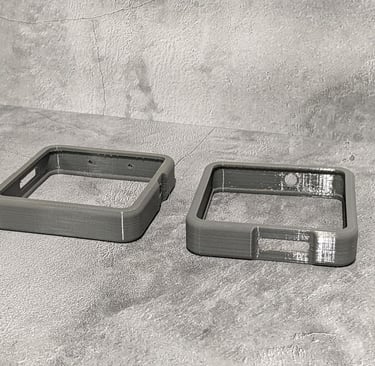
TPU (Thermoplastic Polyurethane) is a flexible and elastic material known for its high abrasion resistance, impact absorption, and rubber-like properties. Its benefits include excellent flexibility, durability, and resistance to oils and chemicals while maintaining good layer adhesion. TPU is commonly used for seals, gaskets, protective covers, flexible housings, wear-resistant parts, and functional prototypes that require elasticity and repeated bending.
Material Info
Shore Hardness 95A
Density 1.15–1.22 g/cm³
Tensile Strength 25–50 MPa
Elongation at Break 300–600%
Modulus @ 100% strain 7–12 MPa
Flexural Modulus ~60–120 MPa
PET CF
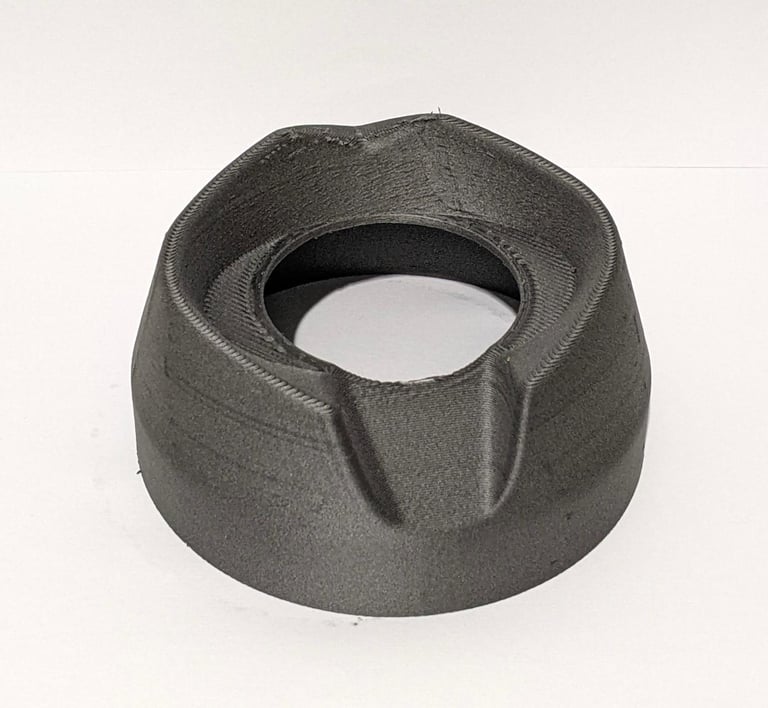
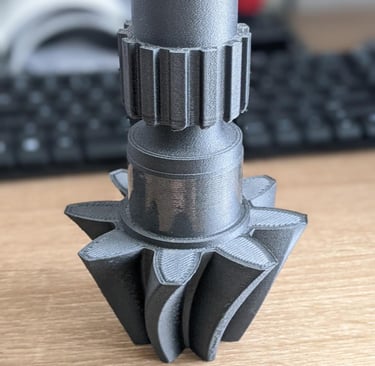
PET CF (Carbon Fiber Reinforced PET) is a high-strength composite material combining PET polymer with carbon fiber reinforcement for enhanced stiffness and structural performance. Its benefits include improved mechanical strength, dimensional stability, and reduced deformation under load, making it suitable for demanding engineering applications. PET CF is commonly used for machine parts, jigs & fixtures, structural components, and functional prototypes that require rigidity, accuracy, and reliable performance.
Material Info
Tensile Strength (X-Y) GB/T 1040: 80.32 Mpa
Tensile Strength (Z) GB/T 1040 : 22 MPa
Elongation at Break (X-Y) GB/T 1040 : 3.61 %
Elongation at Break (Z) GB/T 1040 : 2.11 %
Flexural Strength (X-Y) GB/T 9341: 135.6 MPa
Flexural Modulus (X-Y) GB/T 9341 : 8264.15 MPa
IZOD Impact Strength (X-Y) GB/T 1843 : 7.16 KJ/m2
PA 12 CF
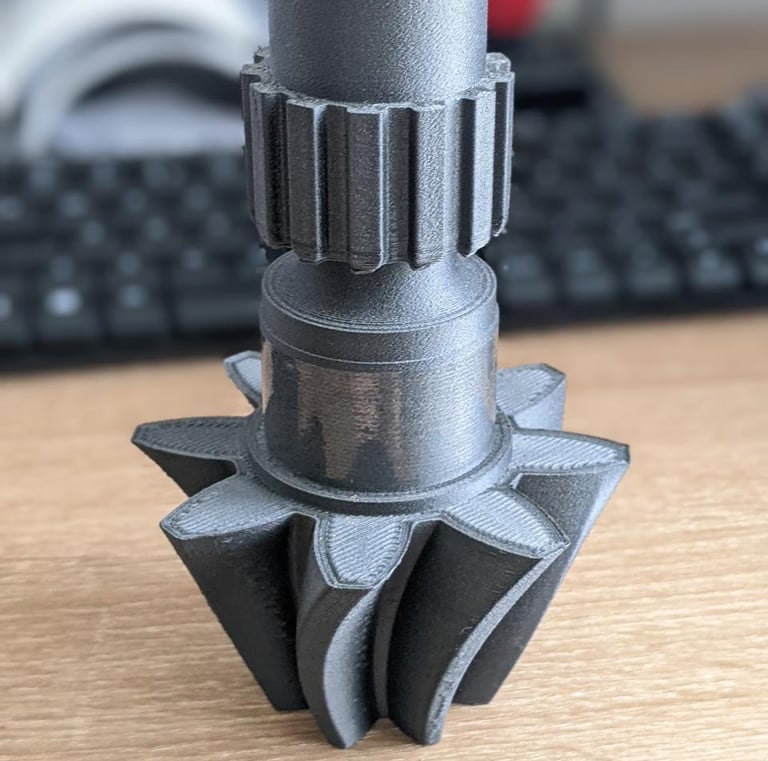
FDM PA 12 CF (Carbon Fiber Reinforced Nylon 12) is an engineering-grade composite material that combines the toughness of Nylon 12 with carbon fiber reinforcement for superior strength and stiffness. Its benefits include high dimensional stability, reduced warping, excellent strength-to-weight ratio, and resistance to fatigue and heat. This material is widely used for jigs & fixtures, machine components, structural parts, and functional prototypes that require high rigidity, durability, and reliable performance in industrial applications.
Material Info
Flexural strengthISO 178: 114.1MPa
Flexural modulusISO 178: 3,532MPa
Impact strength notched IzodISO 179: 12.1KJ/m²
Young’s modulusISO 527: 3748MPa
Tensile strengthISO 527: 69.3MPa
Elongation at breakISO 527: 2.9%
Get in touch
Address
Jl.Cibadak 1 Blok A3 No 42 JatiBaru
Cikarang Timur Kabupaten Bekasi 17533
Jawa Barat - Indonesia
Hours
Monday - Friday
9am - 6pm
Contacts
0812 9238 8805
cs@nusama3d.com